

London fire reflection: aerogel blanket should become the standard for building exterior insulation
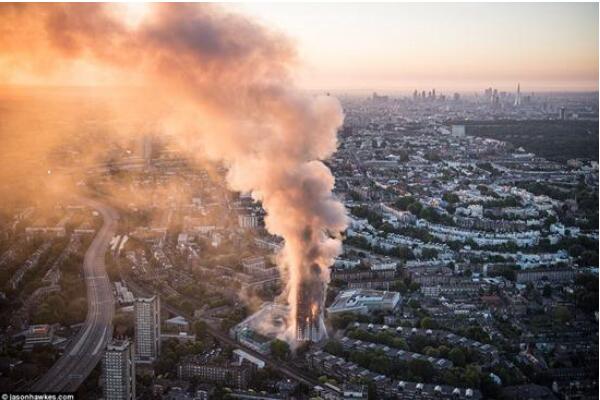
In recent days, statistics on the victims of the London fire have continued to rise.
On the morning of June 14th, local time, a fire broke out in a high-rise apartment building in the West End of London, England. The fire was burned for more than ten hours.
In the evening, the British police said that 12 people had been killed in the fire. On June 16, the confirmed number of deaths reached 30. As of June 19, the police revealed that 79 people had confirmed death or were presumed to have died.
The Times said that the explosion of a refrigerator suspected of being in a kitchen on the 4th floor caused a fire, but this has not been officially confirmed.
The British media acknowledged that the fire was so fierce and fierce that the fire swallowed up the 24-story building in just 15 minutes. The problem was with the exterior insulation used in the renovation of Glenn Fel Tower last year.
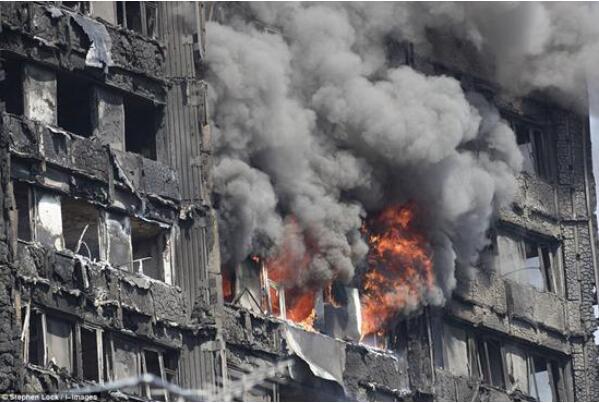
The Telegraph pointed out that over the past 30 years, experts have been vocal about the current building fire protection regulations in London - they are most worried about the fire resistance of exterior insulation.
Prior to 1986, all buildings were required to have at least one hour of fire resistance on the exterior wall under the London Building Act. Despite repeated warnings from the fire safety department, this clause was eventually abolished, and since then, non-combustible materials have no longer been mandatory for building facade materials in the London area.
According to reports, the exterior wall insulation material used by "Glenfelta" is "Raymond" brand aluminum-plastic composite board, and the middle layer is polystyrene board. The building management side installed this insulation layer to make the tower built in 1974 more energy-efficient and beautiful. As a result, it became the "culprit" of this disaster.
Building exterior insulation has become the [culprit" of fires. This is not just in London. Many buildings in China have similar fire hazards.
Polystyrene board is an organic sheet made of polystyrene resin and added with additives such as foaming agent. It has the advantages of light weight, low thermal conductivity, good impact resistance and recyclability. The market for building exterior insulation materials is 80%.
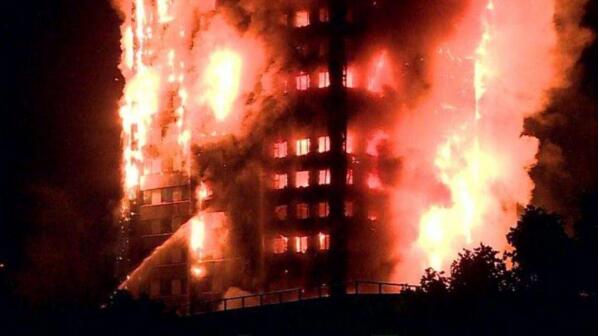
However, polystyrene boards have two major drawbacks: flammable and toxic.
Ordinary polystyrene plates are very easy to burn, even after the addition of flame retardants, the flammability of this material can only meet the Class B standard in the national standard.
What is even more frightening is that once the polystyrene board starts to burn, it will release a lot of heat and produce a lot of toxic fumes. Scientists will find benzene, toluene, formaldehyde, etc. in the combustion process of polystyrene board, which will be extremely short. Time built in people to die.
Inorganic materials such as rock wool and glass wool are also widely used in the field of building exterior wall insulation.
Compared with organic materials such as polystyrene plates, the fireproof performance of rock wool and glass wool is indeed much stronger, and can reach the Class A non-combustible standard in the national standard. However, the thermal conductivity of rock wool and glass wool is relatively high, at around room temperature of 0.040 W/m.K, which makes the building exterior wall insulation performance poor, which leads to the consumption of more energy.
The defects of these materials make "building energy conservation" and "fire safety" become like "fish and bear's paw", and it is difficult to have both. The aerogel insulation material is the key material to solve the contradiction between [energy saving" and [fire fighting" in buildings.
The main component of the silica aerogel insulation blanket is silica, which has the incombustibility of inorganic materials and can reach the Class A non-combustible standard of the national standard CB8624-2012 [Classification of Combustion Performance of Building Materials and Products".
At the same time, the aerogel insulation felt has a pore size of nanometer, and air can hardly transfer heat in the pores. Therefore, at normal temperature, the thermal conductivity of the serogel insulation blanket is as low as 0.015 W/m.K.
The silica aerogel insulationfelt layer is like a piece of warm clothing for a building, which can greatly reduce the energy consumption of the entire building. Moreover, even if there is a fire at a certain position on the exterior wall of the building, the aerogel will give people enough time to escape.
Aerogel insulation blanket are currently not widely used in the field of building exterior wall insulation. "But the fire in London has once again sounded the alarm for all of us. Aerogels should become the standard for building exterior wall insulation in China as soon as possible.